Scroll through a few competitor back-in-stock app listings and "GDPR compliant" and "double opt-in" show up constantly, usually in a features list right next to things like "unlimited notifications" and "branded emails." It's easy to assume this is just a compliance checkbox for stores selling into Europe, but the reality is a bit more useful than that: GDPR questions about back-in-stock alerts usually come down to two separate things, a consent practice called double opt-in, and a genuinely different reason to like it, better email deliverability.
What Double Opt-In Actually Means
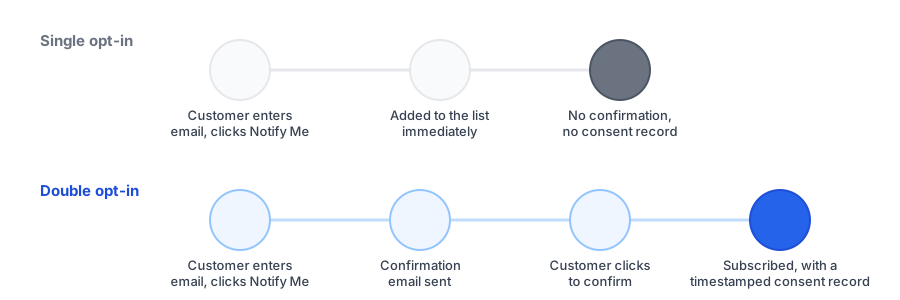
Double opt-in for back-in-stock alerts works in two steps instead of one. With single opt-in, a customer enters their email on a "Notify Me" form and is added to the list immediately. With double opt-in, that same form submission triggers a confirmation email first, and the customer only gets added once they click the link inside it to confirm.
That second step does two things at once: it confirms the email address is real and actually belongs to someone who clicked to receive it, and it creates a timestamped record that the subscriber affirmatively opted in, rather than just having their address collected somewhere.
Why GDPR Comes Up for Back-in-Stock Alerts
GDPR is an EU regulation covering how personal data, including email addresses, gets collected and used. It applies based on who your customers are, not where your business is registered, so a US-based Shopify store with EU customers can still be in scope. A back-in-stock subscription is a form of marketing communication, and having a documented, affirmative record of consent, which is exactly what double opt-in provides, is one of the more straightforward ways apps and merchants demonstrate that a subscriber genuinely opted in rather than being added without a clear record of their choice.
None of this is a substitute for understanding your own obligations as a business. If you sell meaningfully into the EU, it's worth having someone qualified review your actual consent and data practices rather than assuming a feature toggle covers it end to end.
Compliance Isn't the Only Reason Double Opt-In Helps
Set the compliance angle aside entirely and double opt-in still earns its place for a more practical reason: back in stock alert compliance features tend to double as deliverability tools. Confirming an email catches typos and fake addresses before they ever hit your sending list. Every address that does confirm has proven, by clicking a link, that they're a real, engaged recipient, not someone who mistyped an email or filled a form out of curiosity.
That matters because email providers judge your sender reputation partly on how recipients treat your messages: opens, clicks, and importantly, spam complaints and bounces. A smaller list of confirmed, engaged subscribers tends to perform better on all of those signals than a larger list padded with addresses that were never actually verified.
See how Griffin handles opt-in and subscriber data on your own store, free to start.
Install Griffin on ShopifyWhat to Look for in a Shopify Back-in-Stock App's Setup
A few things are worth checking in your GDPR email consent setup on Shopify, regardless of which app you use:
- Documented consent. Does the app record when and how a subscriber opted in, not just their email address?
- An easy way to unsubscribe. Every restock email should include a clear, working way to opt out.
- No sharing subscriber data with third parties. Griffin, for example, keeps subscriber data in your store and never sells or shares it, matching how we describe it on our own homepage FAQ.
- Double opt-in as an available option, even if you don't turn it on for every store, so it's there if you need the stronger consent record later.
FAQ
Is GDPR compliance required for a Shopify back-in-stock app?
If you have customers in the EU, GDPR applies to how you collect and store their email addresses regardless of where your business is based. Whether a specific setup meets your compliance obligations depends on your business, so this is general information, not legal advice.
What is double opt-in and why do some apps use it?
Double opt-in requires a subscriber to confirm their email by clicking a link before they're added to the list, rather than being added the moment they submit a form. It creates a timestamped consent record and confirms the email address is real and actively wanted.
Does double opt-in hurt my signup conversion rate?
It adds one extra step, so some shoppers who forget to confirm won't complete it. In exchange, the list that results is smaller but more accurate, made up of real, engaged email addresses rather than typos or filler entries.
Is this post legal advice?
No. This is general background on double opt-in and consent practices for back-in-stock alerts, not legal advice. Talk to a qualified professional about what your specific store needs to comply with GDPR or other data protection laws.
The Bottom Line
Double opt-in and GDPR compliance aren't just marketing language on a features list, they're a genuinely useful consent practice that happens to help with deliverability too. Whether you need to turn it on depends on your customer base and your own compliance review, but understanding what it actually does, rather than treating it as a checkbox, makes that decision a lot easier.
If you're evaluating a back-in-stock app for your store, Griffin keeps subscriber data in your store, never shares it with third parties, and supports the setup covered here. Install Griffin on the Shopify App Store to see it on your own product pages, free to start.