A shopper lands on the walnut sideboard, sees it is sold out, and taps notify me. For a t-shirt, that is a promise measured in days. For furniture, the next batch may be weeks away from a factory, and nobody on the store side is quite sure when. A merchant in a Shopify Community thread asked for exactly this gap to be filled: an app that can display a restock lead time, such as a one-week wait, rather than leaving shoppers with an open-ended maybe. Back-in-stock alerts for furniture work the same technically, but the shopper's situation is different enough that the setup deserves different thinking.
Why Furniture and Home Decor Restock Differently
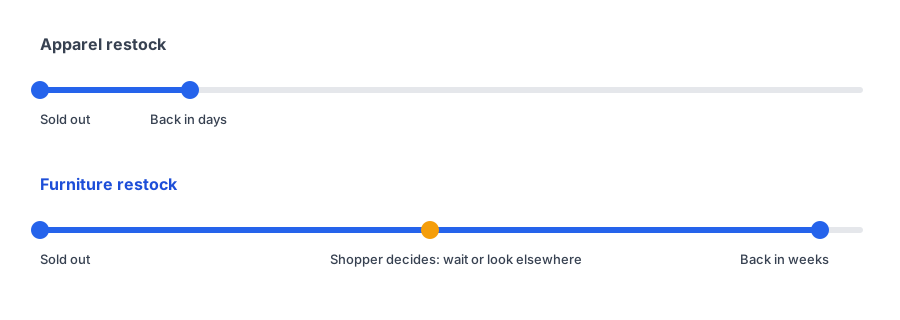
Most back-in-stock advice assumes a restock is a quick refill: a supplier ships, the count goes up, the alert goes out. Furniture rarely works like that. Pieces are often made in batches, finished to order, or shipped from overseas, so the time between sold out and back is long and tends to drift. A case study of a furniture maker describes a factory turnaround of around six weeks, and the lack of a visible restock date was described as hurting conversions. When a shopper cannot tell whether an item returns in one week or three months, many will simply buy something else.
It is also a considered purchase. Someone choosing a dining table measures their room, compares options and may take days to decide. A notify me signup is often a bookmark in that process, which means the email that arrives weeks later has to reintroduce the product, not just announce it.
Set Expectations Before the Signup
The most useful change costs nothing: say how long the wait usually is. A line near the notify me button, such as "typically back in four to six weeks", turns a vague promise into a decision the shopper can make. This is the heart of showing an estimated restock date for furniture. It does not need to be exact, and it should not be a date you cannot defend. A range you usually hit is better than a precise date you miss, because a missed date after a long wait costs more trust than no date at all.
Griffin sends the alert when your inventory returns; it does not predict when that will be. Put your lead-time window in the product description or the text around the signup, and update it when a shipment slips.
Think About Variants Like Fabric, Finish and Size
Furniture variants are not cosmetic. A sofa in a different fabric or a table in a different finish is a different decision, and a restock of one does not help someone waiting on another. Make sure subscribers are tied to the specific variant they chose and that the restock email names it in text. Our post on why a restock email can show the wrong product photo explains why you should not rely on the picture alone to carry that detail.
See how Griffin handles restock alerts on your own store's inventory.
Install Griffin on ShopifyPlan for Small Batches and Long Lists
A small production run can arrive to a waitlist far larger than the number of units. If everyone is told at once, most will find it sold out again within hours. Decide in advance how you will handle that, whether by staging notifications or prioritizing earlier signups. Our guide to limited restocks and waitlists covers the options.
When a Preorder Fits Better
If your lead time is long and fairly predictable, taking payment upfront can serve both sides better than an open-ended waitlist. The shopper commits and gets a place in line, and you fund the production run. For items that come back unpredictably, a restock alert is the lighter fit. Many furniture and home decor stores use both across their catalog; we compare the two in back-in-stock alerts versus preorders.
Make the Email Do More Work
Because the signup may be weeks old, the restock email should rebuild the context: product name, variant, size and finish in plain text, and a clear way back to the page. A shopper who bookmarked a piece a month ago should not need to remember which one it was. For more on structure and copy, see our back-in-stock email guide.
FAQ
How long should a furniture back-in-stock alert take to send?
It sends when inventory returns, so the real question is how long the restock takes. For made-to-order or factory-batched furniture that can be weeks, which is why setting an expectation upfront matters more than the speed of the email itself.
Should I show an estimated restock date on the product page?
If you can give an honest window, yes. Shoppers considering a large purchase would rather see a range such as a few weeks than nothing at all. Only show a window you can realistically keep, and update it when it slips.
What if I have more subscribers than units in the restock?
Furniture batches are often small, so a long waitlist can exceed the units that arrive. Plan for how you will handle that before the shipment lands, not after the first alert goes out.
Should I use preorders instead of a back-in-stock alert for furniture?
It depends on your lead time and cash flow. Preorders take payment upfront and suit long, predictable waits; back-in-stock alerts suit items that return unpredictably. Many furniture stores use both for different products.
The Bottom Line
For furniture and home decor, the alert is the easy part. The hard part is the long, uncertain wait in front of it. Tell shoppers what to expect, tie signups to the exact variant, plan for small batches, and write the restock email as if the shopper has forgotten the details. Griffin handles the alert itself, and you can install it from the Shopify App Store, free to start.