Selling auto parts and motorcycle accessories is different from selling most products because the buyer cannot substitute. A shopper looking for brake pads for a specific model year, or a handlebar fitting for a specific bike, needs that part. A similar one that does not fit is worse than useless: it is a return. That changes how back-in-stock alerts for an auto parts store should work. We could not find reliable published data on restock alerts in this niche, so this post reasons from how fitment works and avoids invented figures.
Fitment Makes Every Part Its Own Product
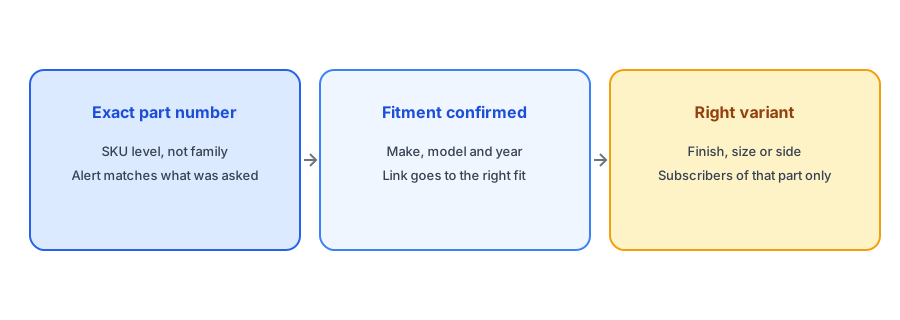
One part number may fit several vehicles, and a family of parts may differ by side, size, finish or model year. Treat each as a separate item. A shopper subscribed to the left-side mirror does not want an email about the right-side one, and a shopper who needs the 2019 kit should not be told the 2016 kit is back. Griffin ties each signup to the variant the shopper chose and notifies only that variant's subscribers when it is restocked, linking straight to it. The more precisely your variants describe fitment, the more precisely alerts can match. Where fitment lives in a separate tool or a data table, make sure the product page still shows the right availability for each fit.
Substitutes Rarely Work, So Say What Will
On most stores a related product is a reasonable fallback for a sold-out one. For parts it often is not. If a part is out of stock, the honest options are to wait, find a compatible alternative from you, or look elsewhere. Say which of those apply. If an aftermarket equivalent genuinely fits, link to it and state the fitment clearly; if not, do not suggest one. Our guide to matching alternatives on a sold-out page explains how to test whether an alternative is close enough, and for parts the bar is high.
Lead Times Depend on Suppliers and Brands
Parts stores often rely on distributors and manufacturers with their own lead times, and some parts are made to order or in occasional production runs. A shopper with a vehicle off the road is in a hurry, while a hobbyist building a bike may be happy to wait months. If you know an estimate, share it near the sign-up so people can decide. If you do not, say so plainly; our replies for "when will it be back in stock?" include wording for uncertain timing.
Alert the people who need that exact part. Griffin adds Notify Me to every sold-out variant.
Install Griffin on ShopifyDiscontinued and Superseded Parts
Manufacturers regularly replace parts with new part numbers. When that happens, the old listing may never restock, and subscribers waiting for it should hear the truth. Tell them the part has been superseded, give the new number and say whether it is a direct replacement. Do not leave people waiting on an alert that cannot come; our guide to handling subscribers when a product is discontinued covers what to send.
Using Demand Data to Stock the Right Parts
Because parts are fitment-specific, demand is concentrated: a handful of vehicles account for most requests. Signups show you which part numbers shoppers want and which vehicles they own. If one part gets many requests, that is a signal to stock deeper. Our post on tracking customer demand for out-of-stock products shows how to read it. Treat small numbers as hints rather than forecasts, since a niche part may have only a few buyers.
Write the Restock Email for Someone Who Knows Exactly What They Want
A parts buyer does not need persuading, only confirming. Lead with the part name and number, state the fitment it was listed for and link straight to that variant. Add the return terms, since fitment errors are the main cause of returns in this niche, and keep promotional content out of the way. If stock is low, say so plainly so the shopper can decide quickly. A short, precise email does more for this audience than a designed one.
A Practical Checklist
- Add Notify Me to every part variant that can sell out, including side, size and finish options.
- Make variants describe fitment as precisely as you can.
- Only suggest an alternative if it genuinely fits.
- Share lead-time estimates, or say plainly that you do not have one.
- Tell subscribers when a part number has been superseded.
FAQ
Why do auto parts stores need restock alerts?
Because buyers need one exact part and cannot substitute. An alert tells them the moment that specific part is available again.
Should each part variant have its own alert?
Yes. Side, size, finish and model year are different variants, and subscribers should only hear about the one they chose.
Should I suggest an alternative part?
Only if it truly fits. A wrong part leads to a return, so be explicit about fitment or say nothing.
What if the part has been replaced?
Tell subscribers the old number is superseded, give the new one and say whether it is a direct replacement.
The Bottom Line
For parts, the restock alert has to match the exact fit. Keep variants precise, be careful with alternatives and be honest about lead times and superseded numbers. Griffin is a Shopify back-in-stock app you can install from the Shopify App Store, free to start.