Music gear buyers rarely browse their way into a purchase. A guitarist has watched demos of a fuzz pedal for weeks, a producer has read every forum thread about a synth, a drummer knows which cymbal weight they want. When that item is sold out, they do not want a substitute, and many will happily wait. A back-in-stock alert on a sold-out music gear page gives that patience somewhere to go. This post looks at why music gear sells out, how variants like finish and handedness complicate it, and how to write alerts that serve players who already know what they want. We do not have reliable published figures on restock alerts for music retail, so there are no invented numbers here.
Why Gear Sells Out
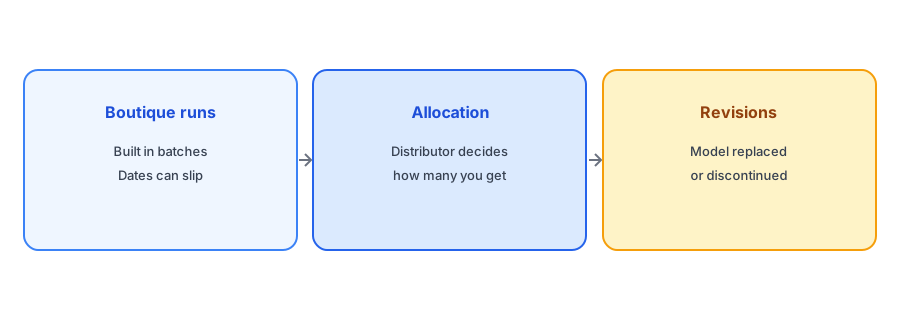
Small production runs
Boutique pedal builders and small synth makers often build in batches. A run of a few hundred units may sell through in days, and the next run depends on parts, the builder's schedule and sometimes a single person's workbench. A guitar pedal restock notification for a boutique brand is often a promise about "the next batch" rather than a date.
Distributor allocation
For popular models from larger brands, retailers often receive an allocation rather than everything they order. When a new model launches or a review goes viral, allocations shrink and your restock may be a handful of units. That is a good case for being honest in the restock email about how many arrived.
Revisions and discontinuations
Gear gets revised: a v2 replaces a v1, a limited colorway ends, a model is retired. Players waiting for the old version need to know whether it is coming back at all.
Variants Matter More Than They Look
A guitar in sunburst and the same guitar in black are different purchases to the person buying them. Left-handed models are a classic case: they are produced in smaller numbers, sell out more often, and a left-handed player cannot use the right-handed version that is in stock. The same applies to cymbal weights, string gauges, cable lengths and voltage versions of power supplies for different countries.
If your Notify Me form only works at the product level, a left-handed player gets an email when the right-handed version restocks, clicks through and finds nothing for them. Griffin ties each signup to the specific variant the shopper chose, so the email only goes out when that variant is back. Our post on variant-level vs product-level alerts explains why that distinction prevents disappointed clicks.
High-Ticket, Patient Buyers
An amp or a synth can be a significant purchase, and people often save for it or wait for a specific finish. Two things follow. First, an instrument waitlist can stay relevant for a long time, so do not expire requests too aggressively on high-ticket items. Second, these buyers compare retailers. If they sign up with you and with two competitors, the first store to email them when stock lands usually gets the sale, so speed matters. Our guide on how fast a restock alert should go out covers that trade-off.
It is also worth showing demand to your suppliers. If 60 people are waiting for a specific finish, that number is a useful argument when you ask a distributor for a bigger allocation. Our guide to tracking demand for out-of-stock products shows how to use signup counts that way.
Let players sign up for the exact finish they want. Griffin adds Notify Me to each sold-out variant and is free to start.
Install Griffin on ShopifyLimited Runs and Drops
Some gear is deliberately limited: an anniversary edition, a collaboration pedal, a small run of a synth in a special color. A limited run synth notify me form before launch is really a waitlist, which is a different tool from a restock alert. Our comparison of waitlists and back-in-stock alerts explains the difference. After a limited run sells out, be clear on the product page whether more will be made. If not, say so and suggest the standard version instead of collecting signups for something that will never return.
Writing the Restock Email for Players
- Name the exact variant: finish, handedness, voltage or weight. That is what the shopper was waiting for.
- Say how many arrived if the number is small. Players respect honesty about allocation more than vague urgency.
- Mention the version if a model was revised, so nobody is surprised by a v2 when they expected a v1.
- Link straight to the variant, not the collection page.
- Keep it short. They already know the product better than most copy can explain.
Our restock email templates include a limited-units version you can adapt.
Used and One-Off Items
Many music stores also sell used or vintage gear, where each item is unique. A restock alert does not make sense for a single used guitar that has sold. A better approach is a "similar items" link on the sold page, or a general signup for a category such as vintage amps, handled outside your restock app. Keep restock alerts for products that genuinely come back.
FAQ
Why do music gear stores need restock alerts?
Gear buyers usually know exactly what they want and will wait for it. An alert brings them back to you instead of a competitor when it returns.
Should left-handed models have their own alerts?
Yes. They sell out often and a right-handed restock is no use to a left-handed player, so alerts need to be variant-level.
What about limited editions that will not return?
Say clearly on the page that the run is finished and point to the standard model rather than collecting signups.
Do restock alerts work for used gear?
Not for one-off items. Use a similar-items link or a category signup instead.
The Bottom Line
Music gear buyers are patient and well informed, so the best restock alert is fast, specific about the variant and honest about how much arrived. Griffin is a Shopify back-in-stock app built for that, and you can install it free from the Shopify App Store.