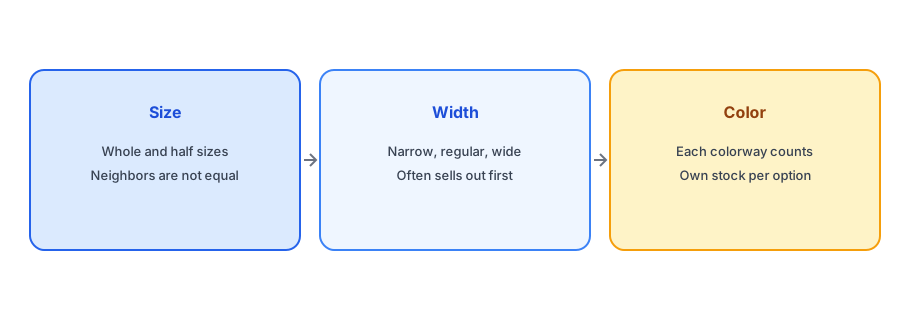
Footwear stores have one of the most granular inventories in retail. A single shoe model can come in a dozen sizes, half sizes between them, two or three widths and several colors, and each combination is its own variant with its own stock. Shoppers cannot swap one for another, because a size that does not fit is not a purchase. That makes back-in-stock alerts for footwear both very useful and easy to get wrong. The apparel and streetwear posts on this blog cover size runs in general, and this one focuses on what is distinctive about shoes. We have no reliable published data for this niche, so we reason from how footwear is made and bought.
Every Size, Half Size and Width Is a Separate Product
A shopper who wears a 9.5 wide does not want an email that the 9 regular is back. Ideally each signup records the exact size and width, and the restock email goes only to the people waiting for that combination. Griffin ties each signup to the variant the shopper chose and notifies only that variant's subscribers when it returns. In Shopify, that means your variants need to represent the real choices: if width is not modeled as an option, a shopper cannot specify it, and alerts cannot be precise. Our post on variant-level alerts explains why this precision matters.
Broken Size Runs Happen Fast
Footwear sells in a bell curve: the middle sizes sell out first, leaving the extremes. A store can have plenty of units in total and still have nothing in the sizes most people want. Signups per size show where the pressure is. If the 8 to 10 range generates most of your requests, that is where to reorder deeper. Our post on size-specific restocks and broken size runs covers the pattern for clothing, and the same logic applies to shoes with extra granularity. Read the data as hints, not forecasts, especially for slower sizes.
Fit Differs Between Brands
Shoppers know that a size 9 in one brand is not a size 9 in another, so they often wait for their exact size in a model they have worn before, rather than guess in a new one. That patience is an advantage: a shopper who knows the fit will likely wait for it. Give that shopper a Notify Me option instead of nudging them toward a neighboring size, which risks a return. If you do suggest a nearby size, label it honestly with fit guidance, and keep the alert tied to the original choice. Our guide to matching alternatives on a sold-out page explains how to test a suggestion.
Tell shoppers when their exact size is back. Griffin adds Notify Me to each sold-out size and is free to start.
Install Griffin on ShopifyReturns and Restocks
Footwear has a high rate of size-related returns in many stores, and returned shoes re-enter stock when they are inspected. That can bring a sold-out size back for a single pair, and an alert to a long list for one pair is a poor experience. Think about whether returned units should flow straight back to sellable stock or be held until a batch accumulates. Our checklist on restocking returned items safely covers the mechanics, and our post on limited restocks and waitlists covers the situation where demand outstrips a handful of pairs.
Seasonal Footwear and Drops
Boots, sandals and running shoes each have seasons, and a sold-out size at the start of a season is more valuable to restock than at the end. For limited releases and sneaker drops, the dynamics are different, with fast sellouts and active communities; see our post on alerts for streetwear and sneaker drops. Be honest about whether a model will return. If a shoe is discontinued, tell subscribers rather than leaving them waiting; our guide to handling subscribers when a product is discontinued covers it.
Writing the Restock Email for a Shoe Buyer
Name the model, size, width and color, show the right image and link straight to that variant. Add a line about fit if you have helpful guidance, mention your return terms and keep the message short. A shopper who waited for a specific size needs reassurance about returns more than persuasion about the shoe.
A Practical Checklist
- Model size, half size, width and color as variants so alerts can be precise.
- Add Notify Me to every combination that can sell out.
- Use per-size signup counts to reorder deeper in the middle of the run.
- Do not push neighboring sizes without honest fit guidance.
- Decide how returned pairs re-enter stock before alerts go out.
- Tell subscribers when a model is discontinued.
FAQ
Why do footwear stores need size-specific alerts?
Because shoppers cannot substitute a different size, and each size, width and color has its own stock.
Should half sizes have their own alerts?
Yes. A half size is a separate variant, and subscribers should hear only about the one they chose.
Should I suggest a neighboring size when mine is sold out?
Only with honest fit guidance. Many shoppers prefer to wait for their exact size.
What about returned pairs?
Decide whether they go straight back to stock or are batched, so one returned pair does not trigger alerts to a long list.
The Bottom Line
For shoes, a restock alert has to be exact: the right size, width and color, with honest guidance on fit and returns. Griffin is a Shopify back-in-stock app you can install from the Shopify App Store, free to start.